

-
Sold out

 Vendor:AMMO by Mig Jimenez
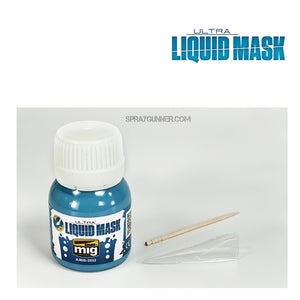
AMMO by MIG Accessories Ultra Masking Liquid
Regular price $5.40 USDRegular price -
Sold out
 Vendor:Vallejo
Vallejo Liquid Model Color Mask (18mL)
Regular price $3.39 USDRegular price -
Sold out
 Vendor:AK Interactive
AK Interactive ABT502 Liquid Mask 100ml
Regular price $9.89 USDRegular price


Masking liquid for scale modeling and airbrush work
Masking liquid is one of those tools that quietly solves problems traditional tape cannot. When working on scale models, miniatures, figures, or detailed airbrush projects, there are areas that are simply too small, irregular, or complex to mask with tape. This is where masking liquid becomes essential. It allows you to protect fine details, curves, textures, and recessed areas while maintaining clean paint edges.
In scale modeling and airbrush work, precision matters. Masking liquid gives you the flexibility to isolate exactly what needs protection without forcing flat materials onto uneven surfaces. Once dry, it forms a removable barrier that shields the surface underneath during painting and peels away cleanly when the job is done.
What’s in this collection
This collection includes liquid masking products designed specifically for hobby and modeling applications. These products are formulated to be easy to apply, easy to remove, and safe for use on common modeling surfaces. Depending on availability, you will find items such as
-
Liquid masking solutions suitable for brush or applicator use
-
Masking liquids compatible with acrylic paints and airbrush work
-
Products designed for fine detail masking and small-scale applications
-
Hobby-focused brands trusted by modelers and miniature painters
Masking liquid is commonly used on canopies, windows, wheels, camouflage patterns, figure details, and textured surfaces where tape would lift or fail to seal properly.
Benefits, uses, and practical tips
One of the biggest advantages of masking liquid is its ability to conform to complex shapes. Raised rivets, engraved panel lines, irregular curves, and organic forms can all be masked without cutting or stretching tape. This makes it especially useful for aircraft canopies, vehicle wheels, and intricate figure details.
Application control is key. Masking liquid is best applied in thin, even layers using an old brush, toothpick, or silicone tool. Avoid using your best brushes, as the liquid can damage bristles if it dries in them. Let the masking liquid dry fully before painting to ensure it forms a solid barrier.
During painting, masking liquid protects the covered area from overspray, washes, and weathering effects. Once the paint is dry, removal is simple. Gently lift the edge with a toothpick or tweezers and peel it away slowly. A properly applied masking liquid should come off cleanly without pulling up paint underneath.
Masking liquid is especially useful for camouflage patterns with soft or irregular edges. By applying it in freehand shapes, you can create complex patterns that would be difficult to achieve with tape alone. It is also a great solution for masking circular shapes, such as wheels or lenses, without the need for pre-cut masks.
A practical tip for best results is to avoid applying masking liquid over fragile paint layers that have not fully cured. Allow your base coat to dry thoroughly before masking. This reduces the risk of paint lifting during removal and ensures crisp, clean results.
For modelers who frequently work on detailed projects, keeping masking liquid in the toolbox saves time and frustration. It complements masking tape rather than replacing it, giving you more options depending on the surface and level of detail involved.