


For a Badger airbrush, start with the work you do most: model basecoats, miniature shading, illustration, or broader spray coverage. Compare the control style, feed arrangement, paint capacity, and nozzle configuration before choosing a model.
We carry Badger tools alongside model-specific parts and connection accessories, so you can check the whole setup before buying. Let us help check the airbrush and hose connection if you are adding a tool to equipment you already own.
-
Save $10.00 USD

 Vendor:Badger
Badger Patriot 105-1 Fine Gravity Airbrush
Regular price $120.00 USDRegular price$130.00 USD-$10.00 USD Sale price $120.00 USD -

 Vendor:Badger
Badger Sotar 20/20 Fine Airbrush
Regular price $125.00 USDRegular price -
Sold out

 Vendor:Badger
Badger Sotar 2020 3in1 Airbrush set
Regular price From $150.00 USDRegular price$175.00 USD-$25.00 USD Sale price From $150.00 USD -
Sold out
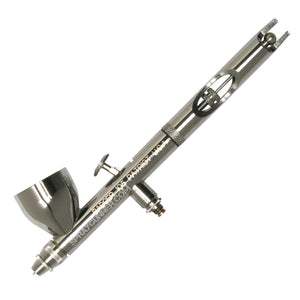 Vendor:Badger
Badger Patriot 105 3in1 Gravity Airbrush
Regular price $135.00 USDRegular price$119.00 USDSale price $135.00 USD -
Sold out

 Vendor:Badger
Badger RK-1 Renegade Krome 2in1 airbrush
Regular price $120.00 USDRegular price$100.00 USDSale price $120.00 USD -
Sold out

 Vendor:Badger
Badger 250-1 Basic Single Action External Mix Spray Gun Set
Regular price $17.75 USDRegular price$24.00 USD-$6.25 USD Sale price $17.75 USD -
Sold out

 Vendor:Badger
Badger Air Brush Co. Xtreme Patriot 105 airbrush
Regular price $120.00 USDRegular price$107.75 USDSale price $120.00 USD -
Sold out
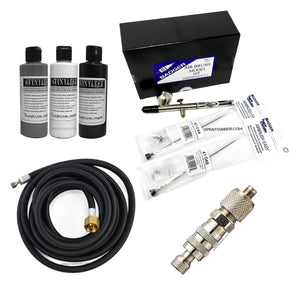
 Vendor:Badger
Badger Patriot 105 3in1 Airbrush Pro Starter Bundle with STYNYLREZ Primers
Regular price $145.00 USDRegular price$164.00 USD-$19.00 USD Sale price $145.00 USD -
Sold out

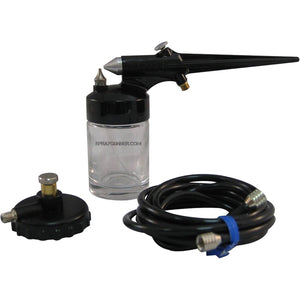 Vendor:Badger
Badger 250-2 Basic Single Action External Mix Spray Gun Set
Regular price $19.00 USDRegular price$26.00 USD-$7.00 USD Sale price $19.00 USD -
Sold out

 Vendor:Badger
Badger Omni 3000 Airbrush
Regular price From $100.00 USDRegular price$90.00 USDSale price From $100.00 USD -
Sold out

 Vendor:Badger
Badger R1V Renegade Velocity
Regular price $98.98 USDRegular price$120.00 USD-$21.02 USD Sale price $98.98 USD -
Sold out

 Vendor:Badger
Badger Patriot Arrow Gravity Airbrush 105-2XR
Regular price $76.00 USDRegular price -
Sold out

 Vendor:Badger
Airbrush Badger Renegade RKJ-2 Krome Jet
Regular price $120.00 USDRegular price$138.00 USD-$18.00 USD Sale price $120.00 USD -
Sold out

 Vendor:Badger
Badger Sotar 20/20 Medium Airbrush
Regular price $108.00 USDRegular price -

 Vendor:Badger
Badger Omni 4000 0.5MM Airbrush
Regular price From $119.99 USDRegular price -

 Vendor:Badger
Badger Two Airbrush Set Patriot 105 and Anthem 155
Regular price $144.99 USDRegular price -

 Vendor:Badger
Badger 100GF Gravity Feed Airbrush Fine
Regular price $100.20 USDRegular price


Which Badger Airbrush Models Should You Compare?
Compare Patriot and Omni configurations for general hobby painting, Sotar Fine for detail-focused work, and the external-mix 250-2 for simpler controls and broader coverage. The exact configuration matters as much as the family name.
- Badger Patriot 105-1 Fine Gravity Airbrush: a dual-action gravity-feed model with a 0.5 mm setup for model work, general hobby painting, and controlled coverage.
- Badger Sotar 20/20 Fine Airbrush: a gravity-feed detail option with a 0.2 mm setup and 2 ml cup for fine lines, small blends, and tight shading.
- Renegade series: additional detail-oriented formats in the catalog. Confirm the selected listing and availability before planning a purchase.
- Badger Omni 4000 0.5MM Airbrush: a dual-action gravity-feed option for general-purpose work and detail techniques with suitable paint preparation.
- Badger 250-2 Basic Single Action External Mix Spray Gun Set: a single-action external-mix sprayer for simpler controls and broader paint coverage.
The small Sotar cup suits short detail sessions, while the Patriot offers a different balance of paint delivery and coverage. Nozzle size alone does not determine the finest line you can achieve; paint preparation, pressure, distance, and control also matter.
Is the Sotar Fine a Good Choice for Thick Primer?
Its 0.2 mm setup is a detail configuration. Check the primer manufacturer’s nozzle and reduction guidance before using it. A larger suitable setup may be a better match for primer coverage.
How Do You Choose a Badger Airbrush for Your Work?
Choose the feed style, controls, and nozzle around your usual paint and the coverage you need. A tool for small blends and fine lines is a different purchase from a sprayer mainly used for larger areas.
Do You Need Detail Control or Broader Coverage?
Prioritize the spray work you repeat most. For basecoating and larger areas, check paint delivery and coverage; for small blends and tight shading, compare detail configurations and how they handle your paint.
- Fine-detail painting: choose a configuration suited to controlled lines, illustration, small blends, and precision shading.
- General hobby painting: Patriot and Omni models provide options for model work and broader painting tasks.
- Broader coverage: external-mix or larger-delivery configurations can suit areas where more paint is needed.
- Control style: single-action and dual-action designs operate differently; choose the format you want to learn or already use.
Our explanation of airbrush feed systems and trigger controls helps you compare those choices. The wider airbrush selection lets you explore other equipment formats if your application needs them.
Will a Badger Airbrush Fit Your Existing Hose?
A Badger airbrush may need its dedicated hose or a Badger-compatible adapter for a 1/8-inch airbrush hose. Confirm the exact fittings at both ends. The Patriot 105-1 listing notes that a hose and jars mentioned in older manuals are no longer supplied by the manufacturer. Read the current contents before ordering the other parts of your setup.
Use our first airbrush setup checklist to check the compressor, hose, connections, paint, and cleaning supplies. An airbrush-only purchase does not automatically include the air source.
Does a Badger Airbrush Set Include a Compressor?
Not necessarily. A set can contain an airbrush and selected accessories without an air source. Read the current included-items list; older manuals or photos may describe a different package.
Can You Use a Badger Airbrush for Models and Miniatures?
Yes, a suitable Badger configuration can cover model basecoats, miniature shading, and detail work. Match the paint, air supply, and workspace to the task; illustration, textiles, and custom graphics may call for a different balance of capacity and control.
Models within the collection provide different combinations of detail, paint capacity, spray control, and coverage. A general-purpose setup can handle basecoats and shading, while a smaller detail setup may suit localized work. Our miniature painting equipment guide helps connect that choice with model preparation and paint selection.
How Do You Clean and Maintain a Badger Airbrush?
Flush before paint dries, inspect the needle and nozzle when spray behavior changes, and follow the model manual for deeper cleaning. Use a cleaner compatible with the paint and the airbrush.
- Flush after painting: remove remaining paint and clean the paint path before residue hardens.
- Inspect the needle and nozzle: look for dried paint, buildup, or damage when spray behavior changes.
- Handle precision parts carefully: follow the model manual for removal and reassembly.
- Match replacement parts by model: confirm the exact part number and nozzle configuration before replacing components.
Our Badger replacement parts guide directs you to the relevant model families. A similar-looking needle or nozzle is not proof of compatibility.
Can You Change Nozzle Size by Replacing Only the Needle?
A size conversion may require a matched needle, tip, and other model-specific components. Use the conversion specified for your exact model. Replacing the needle alone does not establish a compatible conversion.
What Safety Precautions Apply to Badger Airbrushing?
Choose ventilation and personal protection from the paint and cleaner labels and Safety Data Sheets, rather than from the airbrush brand. Water-based acrylics also create airborne mist when sprayed. Solvent-based and two-component coatings require additional assessment and controls for the workspace.
Protect exposed needle tips, keep the airbrush pointed away from people, and disconnect the air supply before maintenance. Follow the equipment manual and keep sharp parts and chemicals away from unsupervised children.
Choose a Badger airbrush around the painting you do most, then confirm its connections and service parts. Call us at +1 (877) 707-8767 with your model choice and existing hose details if you would like help checking the fit.