


A gravity-feed, double-action airbrush is a useful first choice for many model, miniature, and small artwork projects. Choose a setup that suits your paint, workspace, and budget, whether you need an individual airbrush or a bundle with an air source.
Our U.S.-based team can help you check equipment compatibility before ordering and answer equipment questions afterward. We ship from our own warehouse in Oldsmar, Florida. Compare the beginner options below, or ask us to check the airbrush, compressor, and package contents you are considering.
-

 Vendor:Harder & Steenbeck
Harder & Steenbeck ULTRA 2024 airbrush
Regular price From $110.00 USDRegular price -
Save $25.05 USD

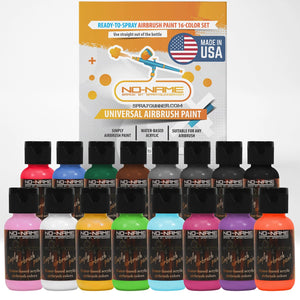 Vendor:NO-NAME brand
Cordless airbrush battery powered compressor with airbrush kit
Regular price From $84.95 USDRegular price$110.00 USD-$25.05 USD Sale price From $84.95 USD -

 Vendor:GSI Creos Mr. Hobby
GSI Creos Mr. Airbrush Procon Boy PS-289 0.3mm Platinum
Regular price From $105.00 USDRegular price$95.00 USDSale price From $105.00 USD -

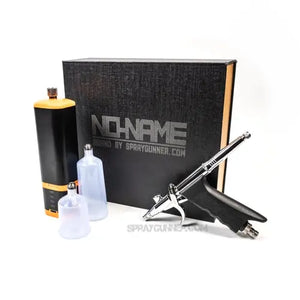 Vendor:NO-NAME brand
Cordless Airbrush Set with battery powered compressor 2024 model
Regular price $84.95 USDRegular price -
Save $10.00 USD

 Vendor:Badger
Badger Patriot 105-1 Fine Gravity Airbrush
Regular price $120.00 USDRegular price$130.00 USD-$10.00 USD Sale price $120.00 USD -
Save $2.00 USD

 Vendor:NO-NAME brand
Portable Compressor for airbrush with powerful 8000 mAh battery
Regular price From $88.00 USDRegular price$90.00 USD-$2.00 USD Sale price From $88.00 USD -

 Vendor:Iwata
NEO for Iwata CN Gravity Feed Dual Action Airbrush
Regular price From $81.75 USDRegular price -

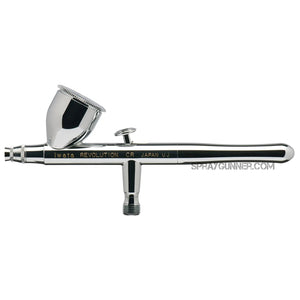 Vendor:Iwata
Iwata Revolution HP-CR Gravity Feed Dual Action Airbrush
Regular price From $106.00 USDRegular price -
Save $20.99 USD

 Vendor:Gaahleri
GAAHLERI GHAC-Swallowtail & Rex Airbrush
Regular price $119.00 USDRegular price$139.99 USD-$20.99 USD Sale price $119.00 USD -
Save $17.00 USD

 Vendor:Gaahleri
GAAHLERI Premium Series GHPM-Mobius 0.3mm Airbrush
Regular price $60.99 USDRegular price$77.99 USD-$17.00 USD Sale price $60.99 USD -
Save $5.00 USD

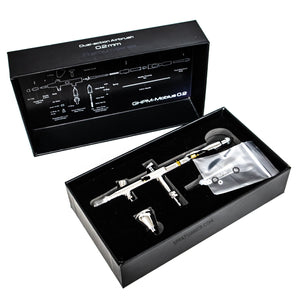 Vendor:Gaahleri
GAAHLERI Premium Series GHPM-Mobius 0.2mm Airbrush
Regular price $71.99 USDRegular price$76.99 USD-$5.00 USD Sale price $71.99 USD -

 Vendor:GSI Creos Mr. Hobby
GSI Creos Mr. Airbrush PS-275 0.3mm
Regular price $84.00 USDRegular price -

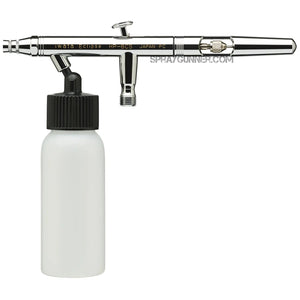 Vendor:Iwata
Iwata Eclipse HP-BCS Siphon Feed Dual Action Airbrush
Regular price From $125.50 USDRegular price -

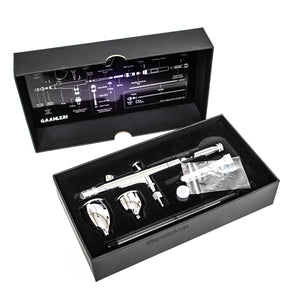 Vendor:Gaahleri
GAAHLERI GHAD-39 Advanced Series Airbrush
Regular price $40.00 USDRegular price$39.99 USDSale price $40.00 USD -

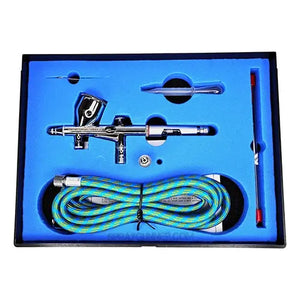 Vendor:NO-NAME brand
Adjustable airbrush kit double action gravity feed
Regular price $33.00 USDRegular price -
Save $8.00 USD

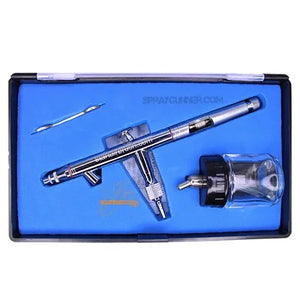 Vendor:NO-NAME brand
Affordable siphon feed Air Brush By NO-NAME Brand
Regular price From $25.00 USDRegular price$33.00 USD-$8.00 USD Sale price From $25.00 USD -
Sold out
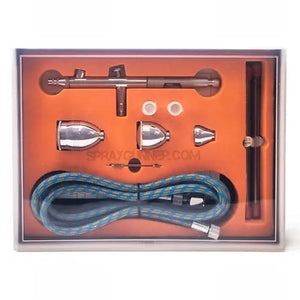
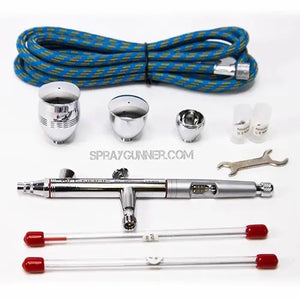 Vendor:NO-NAME brand
NO-NAME Brand Adjustable airbrush kit double action gravity feed
Regular price $39.95 USDRegular price -
Save $20.00 USD

 Vendor:Gaahleri
GAAHLERI Premium Series GHPM-Mobius TG Airbrush
Regular price $99.99 USDRegular price$119.99 USD-$20.00 USD Sale price $99.99 USD -

 Vendor:NO-NAME brand
Affordable gravity feed Air Brush By NO-NAME Brand
Regular price $19.75 USDRegular price -

 Vendor:NO-NAME brand
Dual-Action Gravity Feed Air Brush "Calibur" by NO-NAME
Regular price $25.00 USDRegular price -
Save $9.99 USD

 Vendor:Gaahleri
GAAHLERI Ace Series GHAC-Swallowtail & Studio G Airbrush
Regular price $130.00 USDRegular price$139.99 USD-$9.99 USD Sale price $130.00 USD -
Save $10.00 USD

 Vendor:Harder & Steenbeck
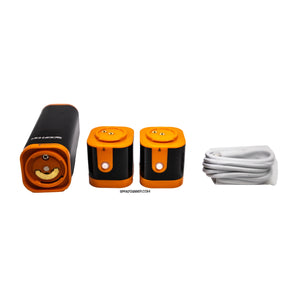
Harder & Steenbeck ULTRA airbrush with Cordless Compressor Bundle
Regular price $185.00 USDRegular price$195.00 USD-$10.00 USD Sale price $185.00 USD -

 Vendor:NO-NAME brand
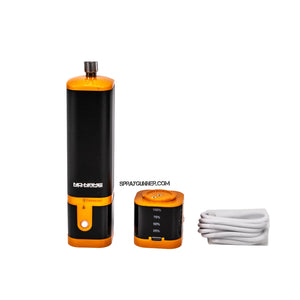
Cordless battery powered compressor for Airbrushing by NO-NAME Brand (compressor only)
Regular price $80.00 USDRegular price$80.00 USDSale price $80.00 USD -
Sold out

 Vendor:NO-NAME brand
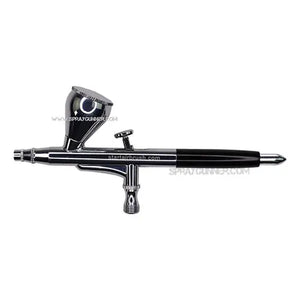
Starter Airbrush For Cordless Compressor By NO-NAME Brand
Regular price $15.00 USDRegular price -
Save $22.04 USD

 Vendor:Gaahleri
GAAHLERI Premium Series GHPM-Mobius SP 0.3 & 0.5 mm Airbrush
Regular price $77.95 USDRegular price$99.99 USD-$22.04 USD Sale price $77.95 USD -
Save $10.01 USD

 Vendor:NO-NAME brand
Affordable detail-oriented gravity-feed double-action airbrush 0.3mm nozzle.
Regular price $19.99 USDRegular price$30.00 USD-$10.01 USD Sale price $19.99 USD -
Save $30.00 USD

 Vendor:Gaahleri
GAAHLERI Ace Series GHAC-Swallowtail SD Airbrush
Regular price $109.99 USDRegular price$139.99 USD-$30.00 USD Sale price $109.99 USD -

 Vendor:Harder & Steenbeck
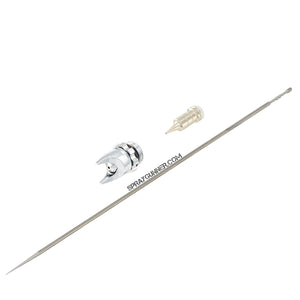
Tuned-up Ultra! Harder & Steenbeck ULTRA airbrush Bundle with new parts
Regular price $205.00 USDRegular price -
Save $7.00 USD

 Vendor:Gaahleri
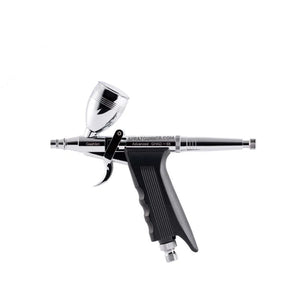
GAAHLERI Advanced Series GHAD-68 Airbrush
Regular price $52.99 USDRegular price$59.99 USD-$7.00 USD Sale price $52.99 USD -

 Vendor:Iwata
NEO for Iwata BCN Siphon Feed Dual Action Airbrush
Regular price From $78.57 USDRegular price$78.57 USDSale price From $78.57 USD -

 Vendor:Iwata
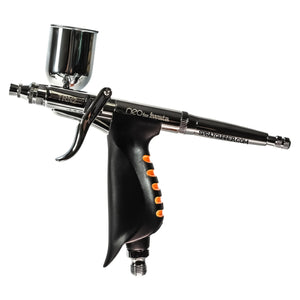
NEO for Iwata TRN2 Side Feed Dual Action Trigger Airbrush
Regular price From $173.00 USDRegular price -

 Vendor:Harder & Steenbeck
Harder & Steenbeck Ultra 2024 "2in1" Airbrush
Regular price $170.00 USDRegular price -
Sold out

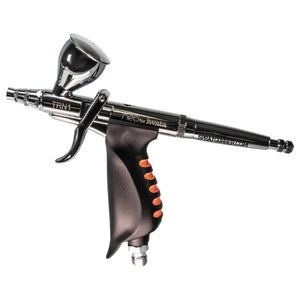 Vendor:Iwata
NEO for Iwata TRN1 Gravity Feed Trigger Airbrush
Regular price From $157.48 USDRegular price -

 Vendor:Gaahleri
GAAHLERI Advanced Series Seeker Airbrush (0.3mm & 0.5mm)
Regular price $55.99 USDRegular price -

 Vendor:NO-NAME brand
Economy-Premium Dual-Action Gravity Feed Air Brush By NO-NAME Brand
Regular price From $69.00 USDRegular price -

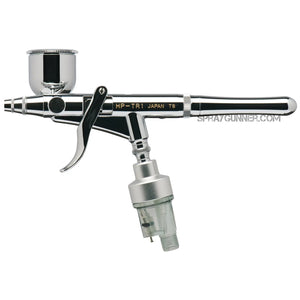 Vendor:Iwata
Iwata Revolution HP-TR1 Side Feed Dual Action Trigger Airbrush
Regular price From $212.00 USDRegular price


What Is the Best Airbrush for Beginners?
The best beginner airbrush is one that matches your usual painting task, paint, and air supply. For model basecoats, miniature shading, and general hobby work, a gravity-feed, double-action model is a useful starting point. A model painter applying basecoats and shading needs a different balance of paint flow and control from someone concentrating on tiny illustration details. Think about your usual paint, the size of the surface, and how often you will change colors.
A gravity-feed model holds paint in a top-mounted cup. With a double-action trigger, you press down for air and pull back to add paint. These current models illustrate different approaches to learning and general painting:
- Harder & Steenbeck ULTRA 2024 airbrush: Its 0.45mm nozzle and Start Control trigger give you a specific learning aid. The trigger supports pressing for air before pulling back for paint, helping you practice that sequence.
- NEO for Iwata CN Gravity Feed Dual Action Airbrush: Interchangeable 3ml and 7ml cups let you choose a smaller paint batch or more capacity. It is a general-purpose option to consider for hobby painting.
- GSI Creos Mr. Airbrush Procon Boy PS-289 0.3mm Platinum: A 0.3mm gravity-feed setup with needle-travel adjustment for limiting trigger pull. Compare the selected package and included accessories before ordering.
For models and miniatures, prioritize the basecoating, shading, or varnishing you expect to do most often. No nozzle size guarantees an easy start or a particular line width. Paint preparation, spraying distance, and practice affect the result. Our guide to feed styles and trigger controls explains the differences if you are comparing unfamiliar terms.
Should Beginners Buy an Airbrush or a Starter Kit?
Choose an individual airbrush if you already own compatible equipment; choose a starter kit if its included components cover what you need. A kit is convenient only when its air supply, connections, and contents fit your project.
When Should I Buy an Airbrush Separately?
Buy an airbrush separately when you already have a compatible air supply or want to choose each component yourself. Check the compressor requirements, hose connection, and included fittings before choosing. The word kit can also describe an airbrush with spare nozzle sets or cups, so read the contents rather than assuming a compressor is included.
Budget for the whole setup, including paint, cleaning supplies, and a workspace prepared for spraying. A larger accessory bundle offers little value if it duplicates equipment you own or leaves out something essential.
What Should I Look for in a Beginner Airbrush Kit?
Look for a kit with a suitable airbrush and air source, clear connection details, and an exact included-items list. The NO-NAME Cordless Airbrush Battery Powered Compressor with Airbrush Kit combines an airbrush and compact rechargeable air source for small projects. Review the selected variant for its paint options and exact supplied contents.
Confirm whether paint and cleaner are separate purchases. You should be able to identify what you will receive and what you still need from the selected package listing.
Do I Need a Compressor for My First Airbrush?
An airbrush needs a compatible compressed-air source. A conventional compressor or a matching rechargeable unit can provide it; an airbrush sold on its own usually does not include either. Check the product contents before ordering.
What Air Pressure Does a Beginner Airbrush Need?
There is no single pressure setting for every beginner airbrush. Use the airbrush and paint manufacturers’ guidance, then check pressure while air is flowing. A maximum pressure figure describes only part of its capability; the useful question is whether it maintains the airflow and working pressure your tool and paint need. Test on scrap material and adjust within the recommended limits.
A compact cordless unit can suit short sessions and small surfaces when its output matches the airbrush. A tank-equipped compressor stores compressed air and can smooth delivery. For longer sessions, check the duty cycle and manufacturer operating limits as well as portability and noise.
Will Any Air Hose Fit My Airbrush?
No. Match the hose fittings to both the airbrush and the compressor, using the specified adapter when needed. A matching-looking thread does not establish compatibility, and a quick disconnect may still need the correct adapter. Avoid ordering a hose based only on the airbrush brand name.
Work through the equipment checklist for a first painting setup if you are assembling components separately. Keep the exact model numbers together so we can help check the combination. Suitable connections and moisture management matter as much as the airbrush you hold.
What Paint Should Beginners Use in an Airbrush?
Start with paint intended for airbrushing and suitable for the surface you want to paint. Water-based hobby acrylics are an option for models and miniatures; follow that paint line’s preparation instructions. Airbrush-ready does not mean every color will spray identically through every nozzle. Pigment, paint age, temperature, and the finish you want can all affect preparation.
Match the reducer or thinner to the actual paint line, and check whether a primer or protective finish is needed. Avoid household substitutes unless the paint manufacturer specifically recommends them.
Test a small amount on scrap material before painting the finished piece. Look for an even pattern and adjust according to the paint instructions. Our paint preparation and thinning guidance explains the variables to check when the spray spits, dries on the tip, or spreads across the surface.
Begin with simple passes, dots, and gradual shading so you can see how distance and trigger movement change the result. You can use a hand brush for finishing details while practicing airbrush coverage. Buying a very small nozzle will not replace those basic skills.
What Safety Precautions Should Beginners Take When Airbrushing at Home?
Use a spraying area with extraction and personal protection appropriate for the paint and cleaner. Read the equipment instructions, product labels, and safety data sheets before spraying. Choose respiratory, eye, and skin protection for the materials involved. Water-based paint still produces airborne mist, and low odor is not proof that protection is unnecessary.
Keep solvent vapors away from ignition sources and choose extraction equipment suitable for the materials you use. A hobby spray booth is not automatically appropriate for flammable products. Automotive coatings and two-component finishes can require specialist facilities and protection, making them unsuitable for an improvised indoor practice area.
For cake decorating or body art, use materials labeled for that specific purpose and suitable dedicated equipment. Hobby model paint does not belong on food or skin. Keep food-use tools separate from equipment that has contained hobby paint or solvents.
Clean before residue dries, using a cleaner compatible with the paint and airbrush. Follow the model instructions for disassembly, release air pressure before servicing, and handle the exposed needle carefully. More force or deeper disassembly is not always the answer to a spray problem.
What Do I Need to Start Airbrushing?
You need an airbrush, a suitable compressed-air source, compatible connections, paint, cleaning supplies, and appropriate spraying protection. Check these essentials before buying optional extras. A holder can keep the tool secure during color changes; stencils and extra nozzle sets can wait until a project calls for them.
Replacement components also appear in this collection. A needle or nozzle listing is a service part, not a complete airbrush. Match parts to the exact model and specified configuration.
Our airbrush buying guide for a first purchase can help you compare the remaining choices. If you need a configuration beyond this beginner selection, browse the wider range of airbrushes and equipment. Choose additional tools when your work gives you a reason to use them.
Before ordering, check the exact variant, current availability, and package notes on the product page. Confirm whether you are buying a complete tool, a bundle, or a replacement component. That final check is especially useful when a photo shows accessories offered in more than one configuration.
What Else Should Beginners Know Before Buying an Airbrush?
How Much Should I Spend on a Beginner Airbrush Setup?
Budget for the complete usable setup, rather than the airbrush alone. Include an air source, connections, paint, cleaner, and appropriate spraying protection, then compare tools within what remains. Optional accessories can wait until a project calls for them.
What Nozzle Size Is Best for a Beginner Airbrush?
Choose a general-purpose nozzle that suits your paint and usual coverage, rather than automatically buying the smallest size. The models above include 0.3mm and 0.45mm options with different controls and paint-handling requirements. Check the specific model and paint guidance before choosing.
Is a Beginner Airbrush Kit Good for Models and Miniatures?
Yes, if its airbrush and air source suit the paint and work you plan to do. Check whether your main task is priming, basecoating, shading, or fine detail. A useful starter setup should handle your regular tasks without requiring accessories you will rarely use.
Can I Use Regular Acrylic Paint in an Airbrush?
Some acrylic paints can be prepared for airbrushing, but not every formula is suitable. Check the paint manufacturer’s instructions for compatibility, thinning, and nozzle requirements. Airbrush-ready hobby paint can simplify your first paint choice, though it may still need adjustment.
How Often Should I Clean My Airbrush?
Clean it after each painting session and flush appropriately between colors before residue dries. Use a cleaner compatible with your paint and airbrush, and follow the model’s instructions for disassembly. A cleaning pot helps contain spray during flushing but does not replace appropriate extraction and protection.
Put together a first airbrush setup with each essential accounted for and a clear reason for every extra. Have us review the equipment you are considering or call +1 (877) 707-8767 with the airbrush and compressor model details before you order.